630-462-9500
After Hour New Client Telephone Number 630-690-6077
1776 S. Naperville Road, Building B, Suite 202,
Wheaton, IL 60189

-

- Home
- Firm Overview
- Attorneys
- Practice Areas
- Divorce
- What To Expect During Your Divorce
- How To Choose A Divorce Attorney
- Divorce Planning
- Protecting Your Credit During Divorce
- Settlement Vs. Trial
- Alimony / Maintenance
- Unallocated Alimony
- Taxes and Divorce
- Distribution of Marital Property
- Dissipation of Assets
- Retirement Plans, IRAs And QDROs
- International & Interstate Divorce
- Post Divorce Modifications & Enforcement
- Divorce FAQs
- High Net Worth Divorce
- Child Custody
- Child Support
- Collaborative Law
- Mediation
- Family Law
- Appeals
- Criminal Representation
- Divorce
- Testimonials
- Media
- Blog
- Contact

What is a Plenary Order of Protection, and How Can I Get One?
 The Pennsylvania Coalition Against Domestic Violence reports that over 10 million people suffer from abuse each year in the United States. With that harrowing statistic in mind, domestic violence survivors should know that there are legal avenues to safety. In cases like these, a DuPage County, IL family law attorney can be a key source of help and guidance.
Dealing with domestic violence in your household or family is a serious ordeal. At The Stogsdill Law Firm, P.C., we are equipped to help survivors of abuse, with over 100 years of combined experience. With our comprehensive legal knowledge, we can walk clients through the process of obtaining an order of protection to seek long-term relief from their abusers.
Emergency Orders of Protection vs. Plenary Orders of Protection
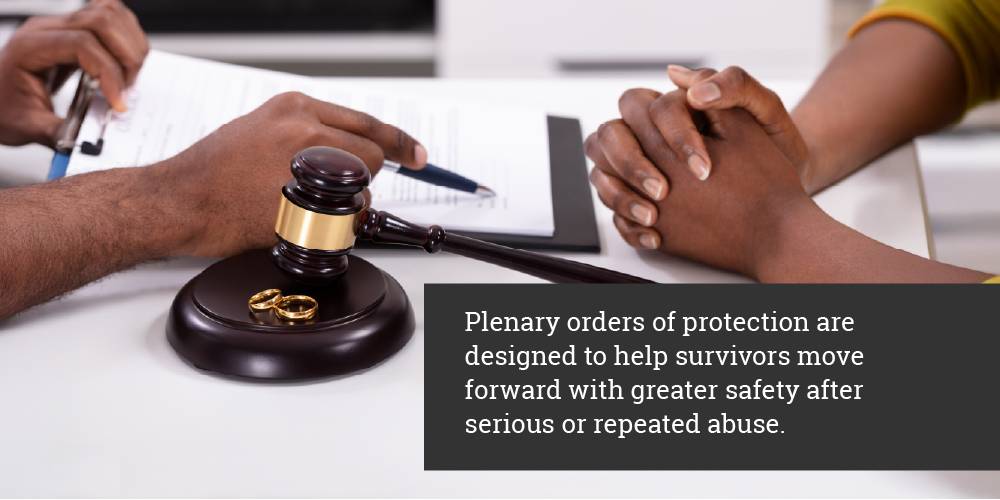
When an individual is experiencing domestic violence, threats, harassment, or abuse in Illinois, one of the most effective legal tools available is a plenary order of protection. Unlike emergency orders, which last only 14 to 21 days, a plenary order can remain in effect for up to two years – and longer in some cases (750 ILCS 60/220). A plenary order of protection can provide strong, long-term protection in serious situations.
In Illinois, an emergency protection order requires only the petitioner's testimony to the judge. The alleged abuser is not required to be notified or even present in court. Emergency orders are only available for up to 21 days or until a full hearing can be held. Meanwhile, a plenary order of protection is granted only after a court hearing with the petitioner and the respondent. If the respondent doesn’t attend, the court could choose to grant a default judgment to the petitioner.
Who Qualifies for a Plenary Order of Protection?
A plenary order of protection may be granted to spouses and ex-spouses, family members, and individuals who are dating or who have had a dating relationship in the past. Roommates or household members qualify for a plenary order of protection, as do co-parents, even if they were never married. Caregivers, persons with disabilities, and assistants to persons with disabilities also qualify for plenary orders of protection.
What Can an Illinois Plenary Order of Protection Do?
A plenary order of protection can do the following:
-
Restrict the possession of firearms
-
Order substance abuse treatment
-
Order counseling
-
Require the respondent to stay away from protected places
-
Grant temporary custody or parenting time restrictions
-
Remove the respondent from the home
-
Prohibit all contact or communication between the respondent and the victim
-
Require the respondent to pay support or damages to the victim
Filing a Plenary Order of Protection in Illinois
To request a plenary order of protection, certain forms must be filled out. These forms are then filed with the Circuit Court in the county where the victim lives. An attorney can also complete and file this paperwork for the victim.
On the forms, the victim must give information about the person the order is against. This includes the person’s name, place of birth, and current address. The victim will also need to describe what happened, including details of the abuse. This can feel invasive and difficult, but it is very important. Clear and complete information helps the court provide the right protection.
For the plenary hearing, the respondent must receive notice. The sheriff usually delivers this notice. At the plenary hearing, both sides can come to court and present evidence. Evidence may include testimony, text messages, emails, social media posts, police reports, witness statements, medical records, and photos.
The judge will decide whether there is a preponderance of evidence showing that the respondent committed domestic violence against the victim. This means the judge believes it is more likely than not that the abuse occurred. If the judge reaches that conclusion, a plenary order of protection will be issued. This order can last for up to two years and may be renewed when that time ends.
What to Know About Plenary Order of Protection Hearings
Generally, the hearing for a plenary order of protection will occur on or before the emergency order of protection is set to expire. However, if the plenary order of protection hearing must be delayed, the emergency order will remain in place until the hearing can be held. During the plenary hearing, the judge will hear from both the petitioner and the respondent.
Relevant evidence will be presented to the court, and testimony may be heard from witnesses. Please note that if the petitioner or the respondent fails to appear at the hearing, the judge will usually favor the party who did appear. So, if the victim misses the hearing, there is a significant chance he or she will not receive the protection they sought.
What Happens if a Respondent Violates a Plenary Order of Protection in Illinois?
Once a protective order is issued, the abuser must follow it to the letter. Showing up at the victim’s home, job, or school could constitute a violation. Other violations may include calling, texting, messaging, or emailing the protected person. Contact through friends, family, or other third parties is not allowed either. Ignoring stay-away orders, custody limits, or rules about firearm possession are also violations. Many violations are reported by the victim, who may call the police or file a report.
In some Illinois counties, police must make an arrest if they have reason to believe the order was violated. They do not decide whether the contact was "friendly" or "accidental." If there is probable cause, that is enough for an arrest. A first violation of a plenary order of protection is usually a Class A misdemeanor, carrying up to 364 days in jail and fines of up to $2,500.
A violation can become a Class 4 felony when the respondent has prior infractions on record or a previous conviction of domestic battery. It can also be upgraded to a Class 4 felony if it occurs along with another crime, such as stalking, trespass, or battery. Penalties for a Class 4 felony can include one to three years in prison, and a felony record with long-term consequences.
It is important to understand that protective orders do not always stop violence. Abusers can sometimes react unpredictably after being given notice. If you fear for your safety, do not rely only on a protective order. Instead, call the police right away if you are in immediate danger.
Contact a Wheaton, IL Order of Protection Attorney
No one deserves to suffer from domestic violence. If you are experiencing domestic violence or feel under threat of domestic violence, contact the highly skilled DuPage County, IL family law attorneys with The Stogsdill Law Firm, P.C.. Call 630-462-9500 today to schedule a private consultation.












Contact Us To Schedule A Consultation With An Attorney At Our Firm
Call 630-462-9500 or provide your contact information below and we will get in touch with you:
The Stogsdill Law Firm, P.C.
1776 S. Naperville Road, Building B, Suite 202Wheaton, IL 60189630-462-9500