630-462-9500
After-Hours New Client Telephone Number 630-690-6077
1776 S. Naperville Road, Building B, Suite 202,
Wheaton, IL 60189

-

- Home
- Firm Overview
- Attorneys
- Practice Areas
- Divorce
- What To Expect During Your Divorce
- How To Choose A Divorce Attorney
- Divorce Planning
- Protecting Your Credit During Divorce
- Settlement Vs. Trial
- Alimony / Maintenance
- Unallocated Alimony
- Taxes and Divorce
- Distribution of Marital Property
- Dissipation of Assets
- Retirement Plans, IRAs And QDROs
- International & Interstate Divorce
- Post Divorce Modifications & Enforcement
- Divorce FAQs
- High Net Worth Divorce
- Child Custody
- Child Support
- Collaborative Law
- Mediation
- Family Law
- Appeals
- Criminal Representation
- Divorce
- Testimonials
- Media
- Blog
- Contact

What Protections Do Military Spouses Get in an Illinois Divorce?
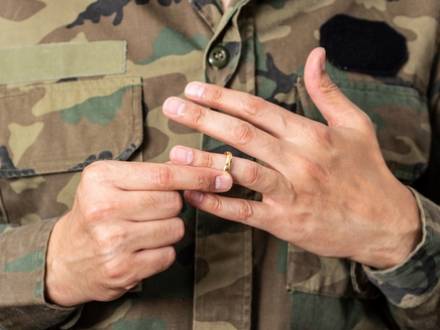 A military divorce can be complicated for many reasons. Questions about court dates, children, and benefits can put significant pressure on military spouses. At the same time, a civilian spouse may be frustrated by the delays and extra work that is required to divorce a husband or wife in the military. If you are going through a divorce in the armed forces, consider working with a Wheaton, IL military divorce attorney who understands your situation.
At The Stogsdill Law Firm, P.C., we are highly familiar with the protections available to military spouses in a divorce. With over 100 years of family law experience, our firm can provide you with careful guidance, whether you are a civilian or a service member.
What Is the Servicemembers Civil Relief Act, and How Does It Affect Divorces in Illinois?
The Servicemembers Civil Relief Act (SCRA) is a federal law that protects people on active duty from certain court cases while they serve. The SCRA applies to divorce cases filed in Illinois and every other state. The goal of the law is simple. A service member should not lose rights in court when military duty keeps him or her from taking part in the case.
One key SCRA protection is the stay. A stay is a pause in the case. If military duty makes it hard for a service member to respond or appear, he or she can ask the court to pause the divorce for at least 90 days. The request usually includes a letter from a commanding officer stating that the member is not available. A judge can grant more time if the duty continues.
The SCRA also guards against default judgments. In a typical case, a spouse who does not respond can lose by default. Under the SCRA, the court must first find out whether the other spouse is in the military. If so, the judge may appoint an attorney to protect that person’s interests before entering an order.
These protections can slow a divorce down, but they do not stop it for good. A service member can also waive SCRA protections in writing, which is common in agreed divorces. For civilian spouses, a stay does not erase their own rights. It only changes the timeline.
Do Military Parents Get Unique Protections in Illinois Child Custody Cases?
Military parents in Illinois child custody cases get some added protections, though the child’s best interests still guide every decision. Illinois uses the terms "parental responsibilities" and "parenting time" instead of custody. Deployment can make it hard for a parent to follow a set schedule, and Illinois law takes this into account.
When a parent is about to deploy, a judge can look at the parent’s military family-care plan. This plan explains who will care for the child while the parent is away. Courts may also enter temporary orders that adjust parenting time during a deployment. In some cases, a deploying parent can ask that a relative or other close family member use part of his or her parenting time. This can help the child stay connected to that side of the family.
A parent’s return from active duty can also support a request to revisit the parenting plan. The aim is to keep a deployment from causing a lasting loss of time with a child. Even so, a judge will not overlook real concerns about safety or stability.
Can Civilian Spouses Get Military Retirement Benefits in Illinois?
Civilian spouses can often receive a share of military retirement benefits in an Illinois divorce, and the 10/10 rule affects how that share gets paid. A federal law called the Uniformed Services Former Spouses’ Protection Act (USFSPA) allows Illinois courts to treat military retired pay as marital property. The 10/10 rule comes from this same federal law.
Under the 10/10 rule, the marriage must overlap with at least 10 years of military service. If the couple was married for 12 years but the member served for only eight of those years, the rule is not met. The overlap is what counts, not the total length of the marriage or the total years of service.
Many people believe the 10/10 rule decides whether a civilian spouse can receive retirement benefits at all. It does not. An Illinois court can still award a share of retired pay after a shorter marriage. The rule only controls who sends the payments. When the 10/10 rule is met, the Defense Finance and Accounting Service (DFAS) can send the former spouse’s share directly. The former spouse does not have to rely on the service member to pay each month. To start direct payments, the former spouse sends DFAS an application along with a copy of the court order dividing the retired pay.
When Does Illinois Have Jurisdiction Over Military Divorce?
Illinois has jurisdiction over a military divorce when at least one spouse meets the state’s 90-day rule. Under Illinois law, one spouse must live in Illinois, or be stationed here while serving in the armed forces, for at least 90 days (750 ILCS 5/401). A service member assigned to Naval Station Great Lakes or Scott Air Force Base may be able to file in Illinois even if he or she claims another state as home. A civilian spouse living in DuPage County can also file here while the service member is stationed elsewhere.
Military families often have more than one choice of where to file. The best option depends on where each spouse lives, where the member is stationed, and which state’s laws best fit the family’s goals. Filing in the wrong place can lead to a second case in another state.
Contact Our Wheaton, IL Military Divorce Attorneys
Military divorce blends Illinois family law with federal rules that most civilian cases never touch. At The Stogsdill Law Firm, P.C., we work with service members and civilian spouses on SCRA stays, parenting plans for deploying parents, and the division of military retirement. Our firm can help you understand your options before you file or respond. Contact our DuPage County, IL family lawyers or call 630-462-9500 to schedule a consultation.












Contact Us To Schedule A Consultation With An Attorney At Our Firm
Call 630-462-9500 or provide your contact information below and we will get in touch with you:
The Stogsdill Law Firm, P.C.
1776 S. Naperville Road, Building B, Suite 202Wheaton, IL 60189630-462-9500